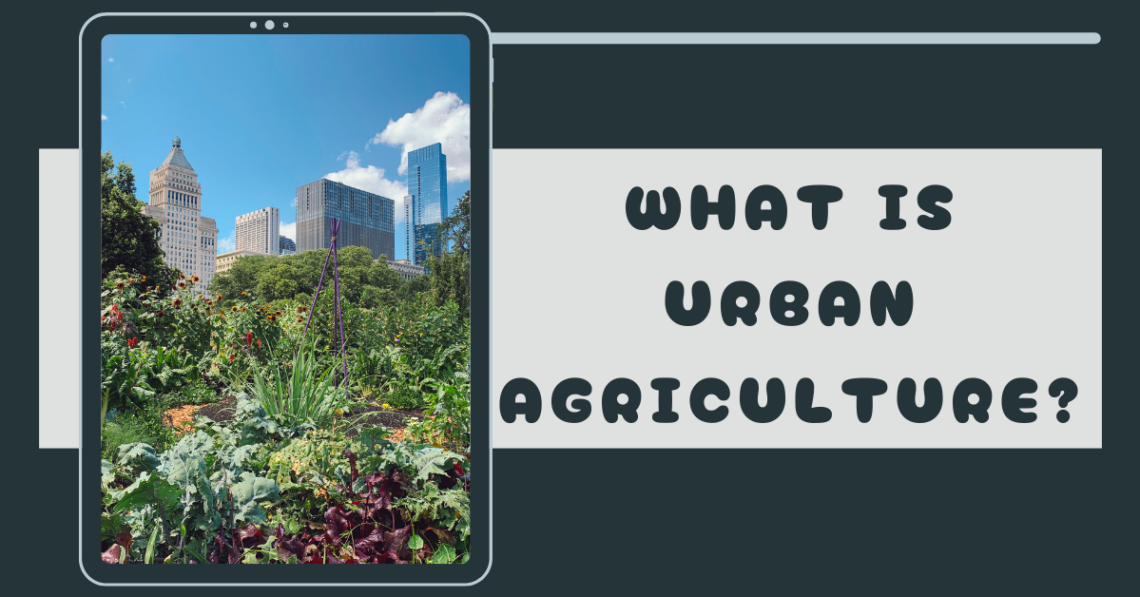
A Student Deep Dive: What is Urban Agriculture?
If you’ve ever wondered what is urban agriculture, it’s simply the practice of growing food in or around cities. This can include rooftop gardens, indoor hydroponic farms, community gardens, or small teaching farms connected to schools and nonprofits. Cities use urban agriculture to improve food access, support sustainability goals, and create local jobs.
Urban agriculture looks different depending on the space available, but the goal is the same: growing food closer to where people live.

Where Urban Agriculture Started
To understand what is urban agriculture today, it helps to look at where it began. Early examples show up in ancient cities like Mesopotamia and Persia, where people grew food inside city walls. The Aztecs built chinampas (floating gardens), and civilizations like the Inca used terraces and irrigation systems to grow food in tight spaces.
In the U.S., urban agriculture became popular during the World Wars through “Victory Gardens.” Today, it’s part of sustainability plans, food access programs, and community‑based initiatives across many cities.
High School Pathway
You don’t need a specific high school program to get into urban agriculture, but certain classes and experiences help.
Helpful classes
- Biology
- Environmental science
- Chemistry
- AP Human Geography
- Engineering or tech electives
- Business or entrepreneurship
Skills to build
- Basic plant care
- Comfort with simple tools and equipment
- Data tracking (spreadsheets, sensors)
- Communication and teamwork
Ways to get experience
- Volunteer at a community garden
- Help with a school garden
- Try a small indoor growing setup
- Join sustainability or environmental clubs
Students who show curiosity and hands‑on interest tend to stand out when applying to urban agriculture programs.
College & Degree Options
There are many ways to study urban agriculture in college. Some students choose direct majors, while others enter the field through related programs.
Majors directly connected to urban agriculture
- Urban Agriculture
- Sustainable Agriculture
- Horticulture
- Agronomy
- Food Systems
- Environmental Science
(Example: College of DuPage offers a Sustainable Urban Agriculture AAS program.)
Related majors that lead into the field
- Geography (especially GIS or urban planning)
- Urban Planning
- Biology or Plant Science
- Environmental Engineering
- Public Health
- Business or Supply Chain
Certificates and two‑year programs
- Hydroponics
- Controlled Environment Agriculture (CEA)
- Greenhouse Management
- Urban Farm Management
- Soil and Water Technology
Universities like Loyola University Chicago and the University of the District of Columbia offer hands‑on programs that connect sustainability, food systems, and community work.
Careers in Urban Agriculture
Understanding what is urban agriculture also means understanding the wide range of careers within it. Some roles focus on growing food, while others focus on science, technology, education, or community programs.
Growing & Production
- Urban farmer
- Greenhouse technician
- Hydroponic or aquaponic technician
- Vertical farm operator
- Rooftop farm manager
Science & Technical
- Plant scientist
- Agronomist
- Soil scientist
- Water systems technician
- CEA specialist
Technology & Data
- Farm automation technician
- Sensor/data analyst
- GIS mapping specialist
- Climate or crop modeling assistant
Community & Education
- Community garden coordinator
- Food access program staff
- School garden educator
- Nonprofit agriculture program manager
Business & Operations
- Farm operations manager
- Local food distribution coordinator
- Sustainability consultant
Less Obvious Career Paths
- Mushroom cultivation
- Insect farming
- Algae production
- Composting and soil regeneration
- Food systems policy and planning
Urban agriculture careers continue to grow as cities invest in sustainability and local food systems.
Skills You’ll Use in the Field
- Plant care and crop basics
- Understanding water, light, and soil needs
- Basic engineering (pumps, airflow, lighting)
- Data tracking and monitoring
- Communication and community engagement
- Food safety and handling
Urban agriculture blends science, problem‑solving, and community work.
Where Urban Agriculture Is Going
As more people ask what is urban agriculture and how it fits into the future, cities are expanding their programs. Current trends include:
- More vertical farms and indoor growing systems
- AI‑supported greenhouse management
- Climate‑resilient crops
- Rooftop farms on schools, hospitals, and businesses
- More city grants and programs supporting local food production
- Community‑led food justice projects
- Integration with smart city technology
Urban agriculture is expected to keep growing as cities plan for sustainability and long‑term food access.
How to Get Experience
You don’t need land to get started. Students can build experience through:
- Volunteering at community gardens
- Internships at local farms or greenhouses
- Starting a small indoor herb or hydroponic setup
- Joining local environmental or food access groups
- Attending workshops at universities or nonprofits
- Exploring USDA urban agriculture programs
Hands‑on experience is one of the best ways to enter the field.
Challenges to Know About
Urban agriculture has a lot of potential, but it also comes with challenges that students should understand early on. These issues don’t make the field less valuable, they simply show what it takes to run food‑growing systems inside a city.
High energy costs for indoor farms
Indoor farms rely on artificial lighting, climate control, and water circulation systems.
- LED lights run for long hours
- Heating and cooling systems must stay consistent
- Pumps and sensors need constant power
This makes energy one of the biggest expenses for vertical farms and hydroponic setups.
Zoning rules and land access
Not every city allows food production in every neighborhood.
- Some areas restrict livestock, composting, or commercial sales
- Rooftop farms may need special permits
- Vacant lots often have unclear ownership or short‑term leases
Students entering the field should know that policy and land use shape what’s possible.
Soil contamination in older cities
Many urban areas have soil that contains heavy metals or pollutants from past industrial use.
- Lead and arsenic are common in older neighborhoods
- Soil testing is required before planting
- Some sites need raised beds or soil replacement
This is why many urban farms use containers, greenhouses, or hydroponics.
Funding for community projects
Community gardens and nonprofit farms often rely on grants or donations.
- Funding cycles can be unpredictable
- Staff may juggle multiple roles
- Long‑term planning can be difficult without stable support
Students interested in community‑based work should know that funding is part of the job.
Balancing sustainability with cost
Urban agriculture aims to be sustainable, but sustainable systems can be expensive to build.
- Eco‑friendly materials cost more upfront
- Water‑saving systems require installation
- Energy‑efficient lighting is an investment
Finding the balance between environmental goals and financial reality is a key part of the field.
Why Urban Agriculture Matters
Urban agriculture isn’t just about growing food. It supports healthier communities, stronger local systems, and more sustainable cities. Understanding these benefits helps students see why the field is growing so quickly.
Local food access
Urban agriculture brings fresh produce closer to the people who need it most.
- Reduces reliance on long supply chains
- Helps address food deserts
- Supports neighborhood‑level food security
Community health
Growing food in cities encourages healthier habits and shared spaces.
- Fresh produce becomes more available
- Gardens create safe, green gathering areas
- People connect through shared work and learning
Climate resilience
Urban agriculture helps cities adapt to climate change.
- Rooftop farms reduce heat
- Plants improve air quality
- Local food systems reduce transportation emissions
Green jobs
The field creates new roles in science, technology, education, and community work.
- Vertical farm technicians
- Greenhouse operators
- Community food program staff
These jobs support both sustainability and economic growth.
Education and youth programs
Urban farms and gardens are powerful teaching tools.
- Students learn plant science and sustainability
- Schools use gardens for hands‑on STEM lessons
- Youth programs build leadership and teamwork
Stronger local food systems
Urban agriculture adds resilience to city food networks.
- More local growers
- More community involvement
- More diverse food sources
It strengthens the connection between people, food, and place.
In conclusion…
Understanding what is urban agriculture also means understanding its challenges — from energy use to zoning — but these challenges are part of what makes the field innovative and important.
Students who are curious about food systems, climate solutions, or hands‑on environmental work can find many pathways into this area.
Whether you’re interested in plant science, technology, community programs, or urban planning, there’s space to explore and build a meaningful career.
